Archives
- 2026-04
- 2026-03
- 2026-02
- 2026-01
- 2025-12
- 2025-11
- 2025-10
- 2025-09
- 2025-03
- 2025-02
- 2025-01
- 2024-12
- 2024-11
- 2024-10
- 2024-09
- 2024-08
- 2024-07
- 2024-06
- 2024-05
- 2024-04
- 2024-03
- 2024-02
- 2024-01
- 2023-12
- 2023-11
- 2023-10
- 2023-09
- 2023-08
- 2023-07
- 2023-06
- 2023-05
- 2023-04
- 2023-03
- 2023-02
- 2023-01
- 2022-12
- 2022-11
- 2022-10
- 2022-09
- 2022-08
- 2022-07
- 2022-06
- 2022-05
- 2022-04
- 2022-03
- 2022-02
- 2022-01
- 2021-12
- 2021-11
- 2021-10
- 2021-09
- 2021-08
- 2021-07
- 2021-06
- 2021-05
- 2021-04
- 2021-03
- 2021-02
- 2021-01
- 2020-12
- 2020-11
- 2020-10
- 2020-09
- 2020-08
- 2020-07
- 2020-06
- 2020-05
- 2020-04
- 2020-03
- 2020-02
- 2020-01
- 2019-12
- 2019-11
- 2019-10
- 2019-09
- 2019-08
- 2019-07
- 2019-06
- 2019-05
- 2019-04
- 2018-11
- 2018-10
- 2018-07
-
LY2090314 receptor br Conclusions We can conclude
2021-05-10

Conclusions We can conclude that Arg293 is important but not indispensable for MeGlcA recognition by EcXyn30A since the R293A variant still retains activity and preference for MeGlcA-substituted substrates. The substrate specificity of GH30_8 glucuronoxylanases is most probably determined by an o
-
The Penicillium strain used in
2021-05-10

The Penicillium strain used in this work was isolated from Atlantic forest soil and previously screened as lipase producer (Tauk-Tornisielo et al., 2005). The immobilization was previously evaluated using hydrophobic supports, i.e. agarose based butyl-(But), phenyl-(Phe) and octyl-Sepharose (Oct), a
-
Early VL diagnosis makes it possible to
2021-05-10
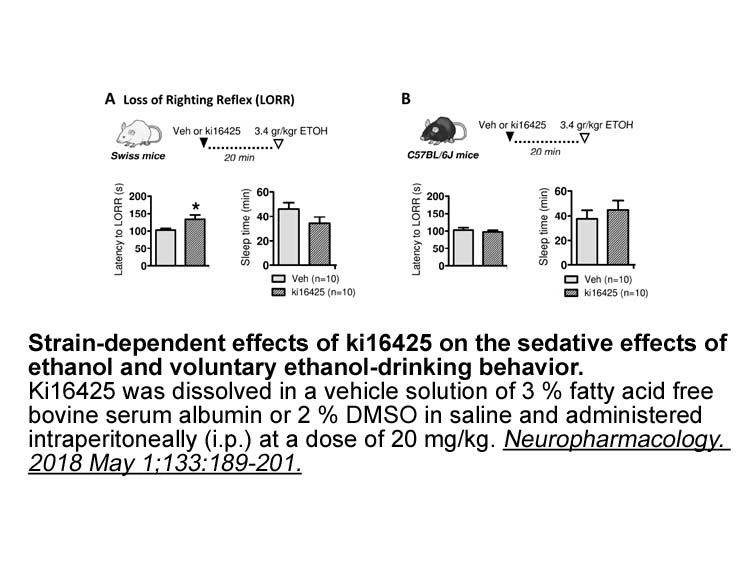
Early VL diagnosis makes it possible to formulate a quicker and more effective treatment against the disease, which could increase the possibility of a cure for the patients, as well as reduce the toxicity of the drugs (Coelho et al., 2009); however, conventional and molecular parasitological method
-
Using HPLC and an amino acid
2021-05-10
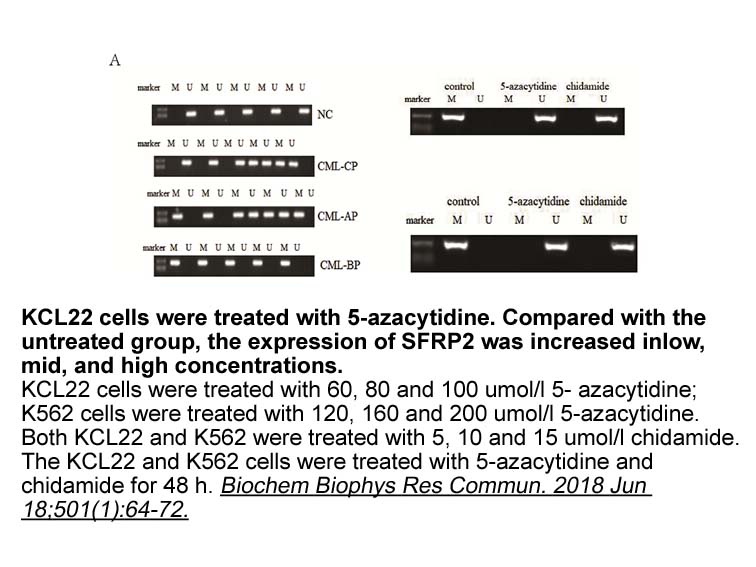
Using HPLC and an amino Donepezil HCl sequencer, the site of cleavage into the fluorogenic substrate AbzFRQEDDnp, determined as specific to the endopeptidase STH2, was analyzed and identified as being R2-Q3, and into substrate AbzFGQEDDnp, determined as specific to SH1, it was G2-Q3 (Fig. 5, Fig. 6
-
In the course of this study K PFOS did
2021-05-10
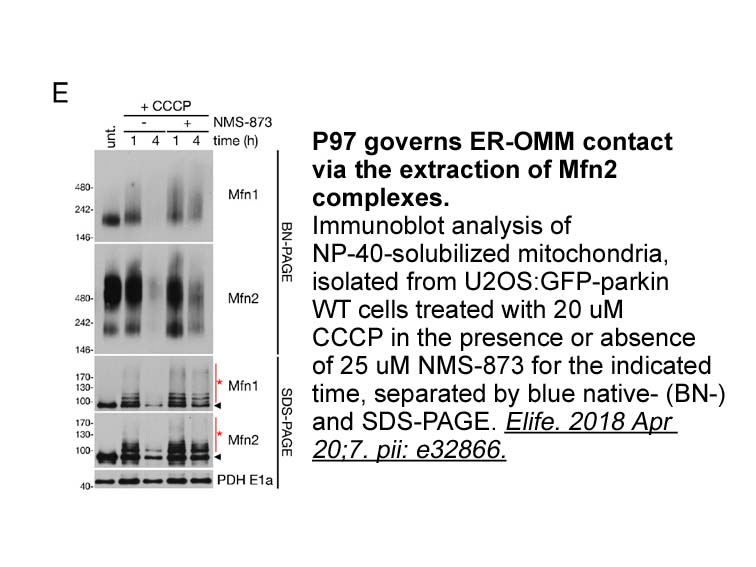
In the course of this study, K+PFOS did not appear to have any effect on the thyroid parameters evaluated (H&E histology, follicular epithelial cell proliferation, and follicular epithelial apoptosis). This is an interesting observation considering the fact that treatment with K+PFOS resulted in ac
-
Breast cancer is the most common neoplasm in women
2021-05-10
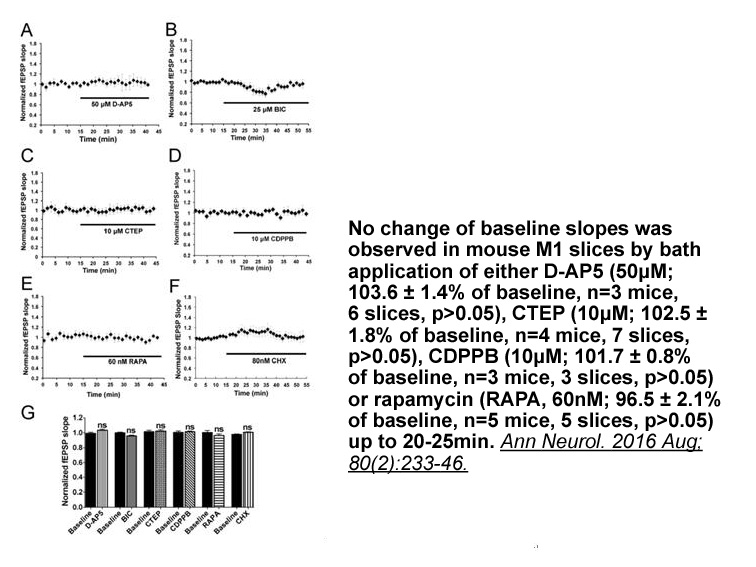
Breast cancer is the most common neoplasm in women, with approximately 231,840 new cases of invasive breast cancer, 60,290 additional cases of in situ breast cancer and 40,290 deaths occurring in 2015 in the United States. Meanwhile, about 2350 men will be diagnosed with breast cancer, and 440 men
-
In the present study real time polymerase
2021-05-10
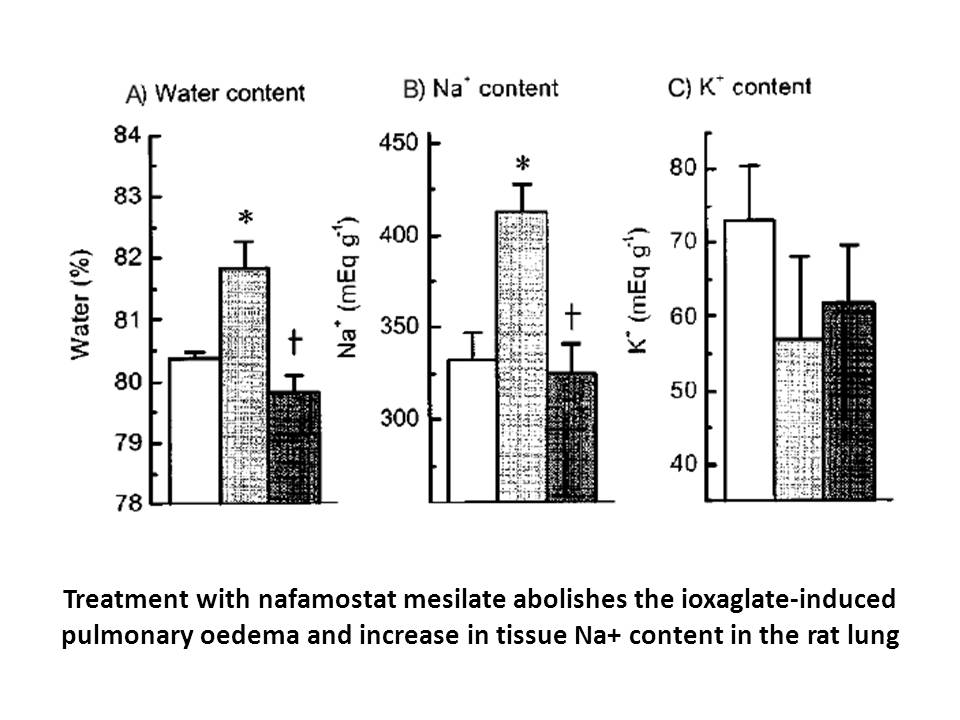
In the present study, real-time polymerase chain reaction also confirmed that gene expressions of RT1 class II, locus Bb (RT1-Bb) was up-regulated and Spi-B transcription factor (Spib) was downregulated at day 3 after the VMH lesions. These two genes work as one of immune responses. RT1-Bb controls
-
The data from the Sur lab
2021-05-10
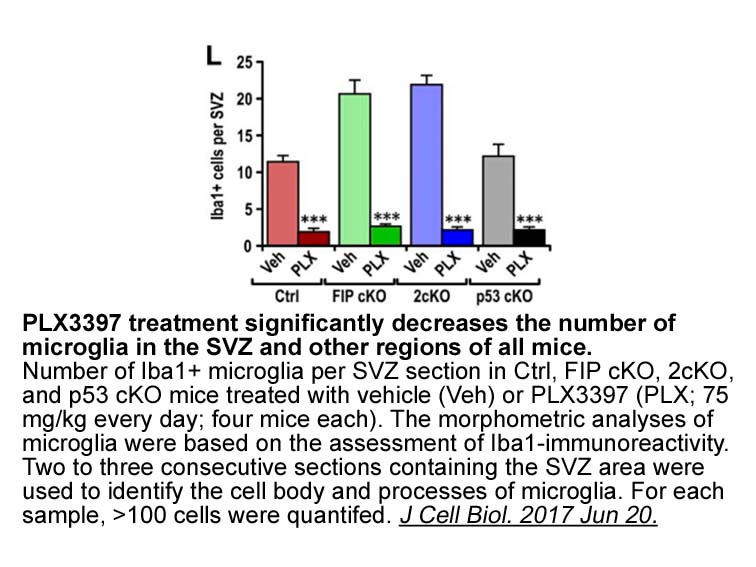
The data from the Sur lab have showed DNA-PK is involved in metabolic gene regulation in response to insulin. DNA-PK regulates fatty BMS 493 synthesis by modulating the protein expression of fatty acid synthase (FAS) in a feeding-dependent manner. DNA-PK induces the activation of Upstream Stimulato
-
DA neurons are capable of somatodendritic
2021-05-10
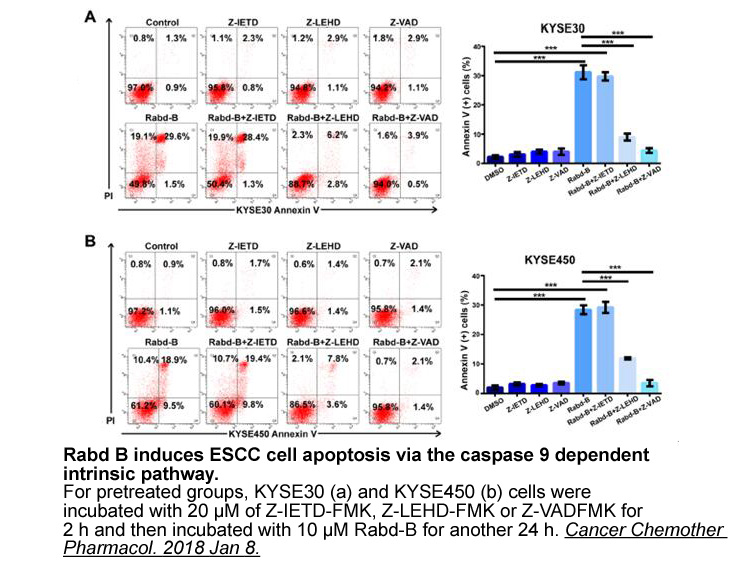
DA neurons are capable of somatodendritic and axonal DA release, which may occur at synapses, as well as non-synaptic or asynaptic sites (Trudeau et al., 2014). DA may also be released at different timescales and in response to different DA neuron firing patterns (Grace et al., 2007). Furthermore, s
-
The potential impact of multiple washings on DNA retention i
2021-05-10
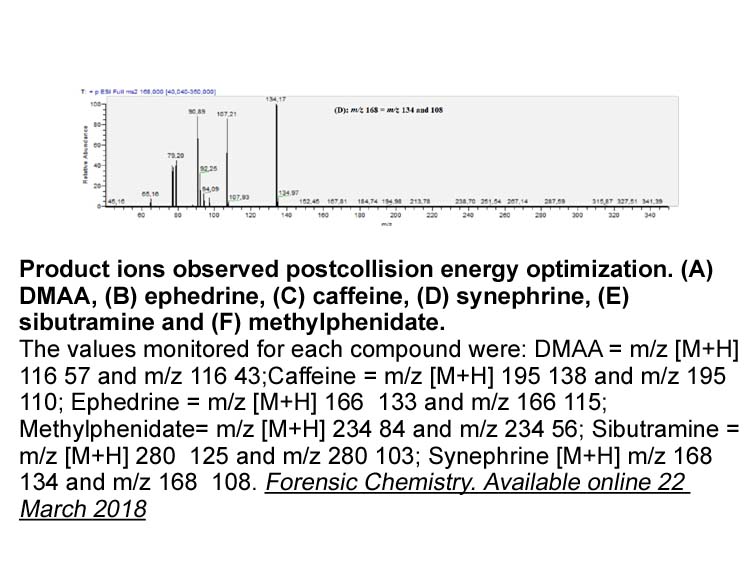
The potential impact of multiple washings on DNA retention in semen stains had not previously been addressed. In the present study, multiple washes of semen-stained cotton cloth produced only a minimal loss of recovered DNA suggesting that multiple washes may not materially affect DNA recovery (Fig.
-
We also performed a correlation analysis independent
2021-05-10
We also performed a correlation analysis independent of annotated gene sets to identify potentially novel genes that are co-expressed with DHODH. Using the top 100 DHODH co-expressed genes in COAD, LGG, STAD, and PAAD diseases, we identified four common genes across all four diseases (Fig. 9). These
-
Classical DHFR inhibitors such as methotrexate
2021-05-10
Classical DHFR inhibitors such as methotrexate (MTX) bind tightly to the enzyme and possess adequate clinical pharmacokinetics. MTX bind to the DHFR binding site through the formation of hydrogen bonds with Asn64, Lys68, Arg28, Arg70, Val115 and Ile7 amino 15 mg residues as well as hydrophobic inte
-
The HPV E proteins are acidic oncoproteins
2021-05-10

The HPV E7 proteins are acidic oncoproteins of approximately 98–103 A922500 that contain 3 domains: the conserved region (CR) 1, CR2, and the carboxyl terminal (C-terminal) domain. The CR1 domain is necessary for cellular transformation and RB degradation in mucosal high risk HPVs. The CR2 domain c
-
An intriguing feature of the pre and postsynaptic processes
2021-05-10
An intriguing feature of the pre and postsynaptic processes at the level of the VTA that have been shown to be mediated by CRF2 receptors [9], [34] is that they are exerted only by agonists with high affinity for both CRF2 receptors and CRF-BP. The four endogenous peptides of the CRF system have hig
-
The period of status survived before transition and its
2021-05-08
The TNF-alpha, recombinant murine protein of status survived before transition and its censorship were required to be identified. Referring to the extracted data set in Table 1, the system started to operate at 10:30 with the status 1111 and then changed to the status 1112 at 12:00. The period for
16708 records 701/1114 page Previous Next First page 上5页 701702703704705 下5页 Last page